MINOXIDIL + FINASTERIDE SOLUTION
PRESCRIPTION HAIR LOSS TREATMENT
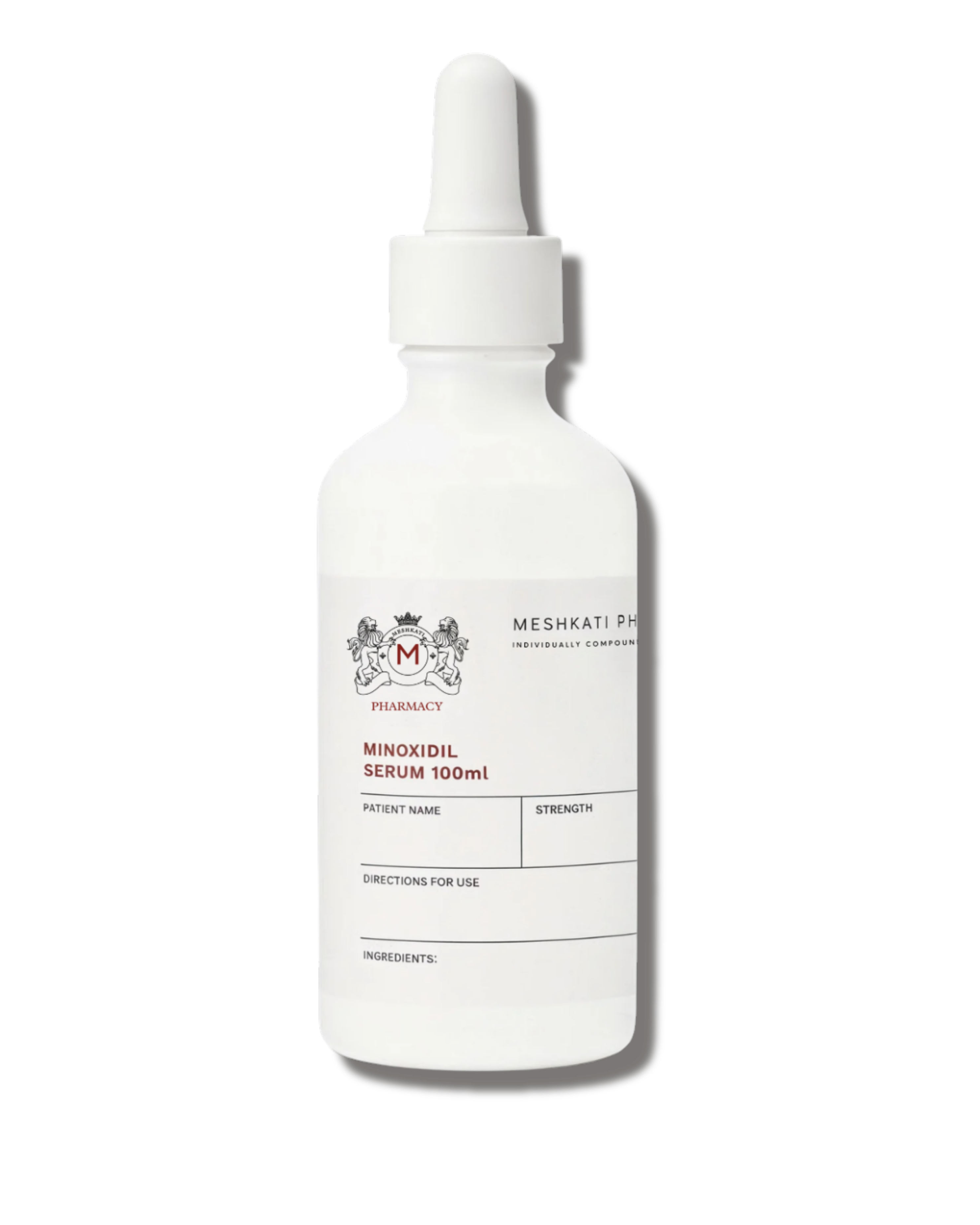
Clinician-prescribed and custom-compounded by our expert pharmacists, combining minoxidil and finasteride dual-action in a single topical solution. Formulated as part of a personalised treatment designed to support hair regrowth and slow the progression of hair thinning by increasing blood flow and blocking DHT at the follicle level.
Important to note: the final formulation is individually compounded based on hair and scalp assessment, and may include additional supporting ingredients prescribed by our specialist.
Alcohol free formulation • Propylene Glycol free • Clinically guided
- Clinician review of your assessment
- Prescription treatment compounded to your plan
- Ongoing access to clinical guidance and reviews
- Secure delivery to your door
Dosage and formulation are determined following a clinician assessment. Strength, frequency, and formulation may vary based on your hair loss pattern, medical history, and response to treatment.
The Science Behind the Treatment
How minoxidil and finasteride work together to support hair growth at the follicle level.
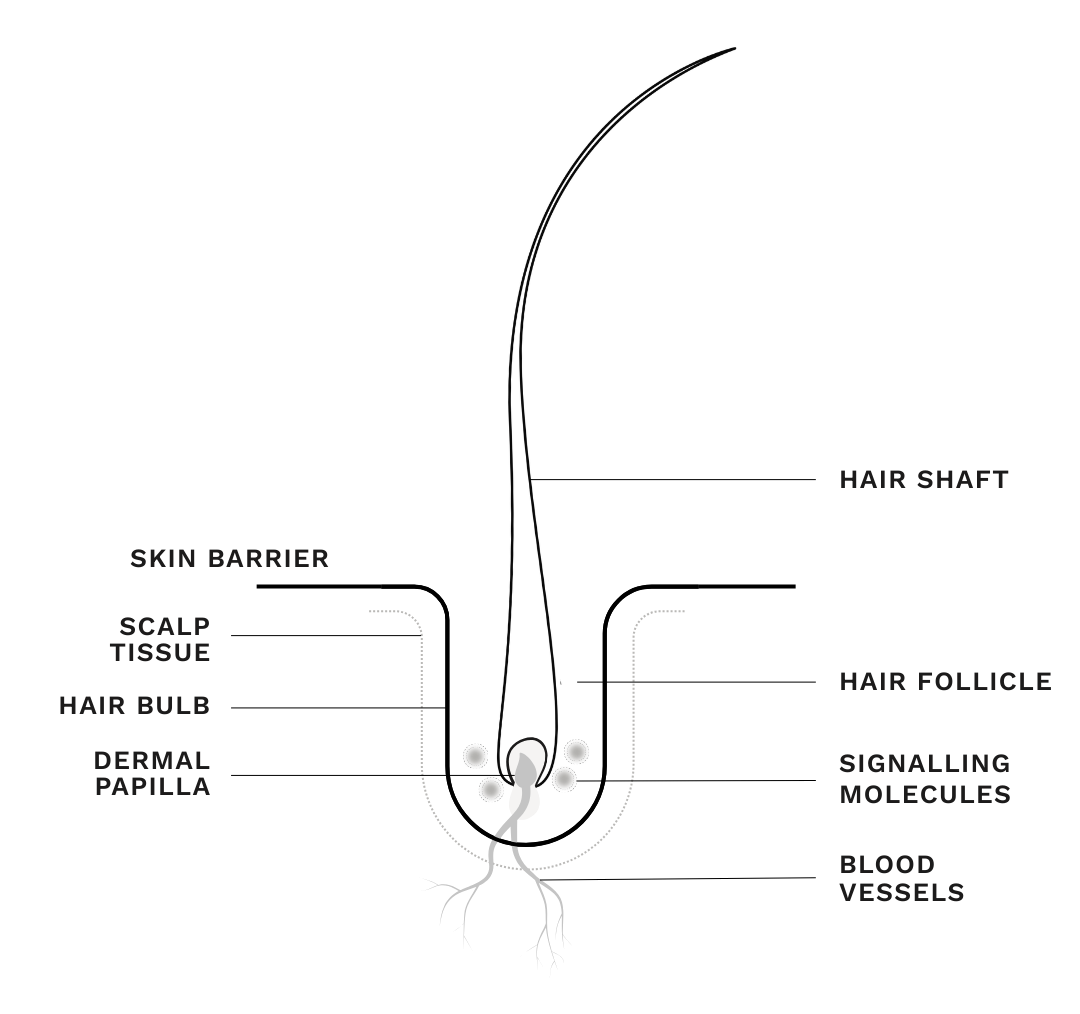
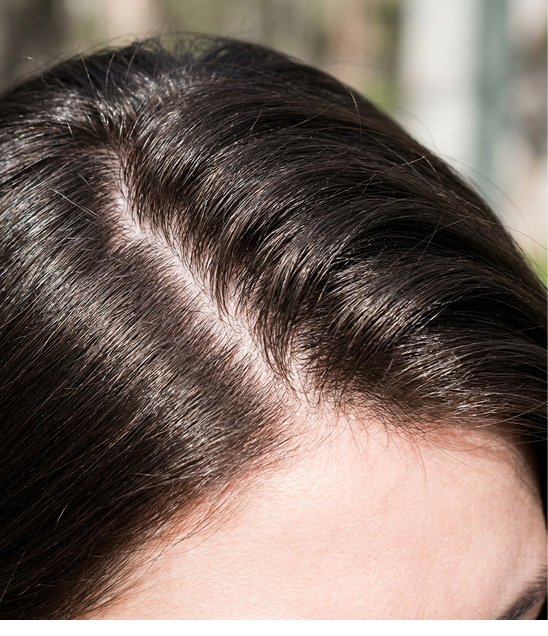
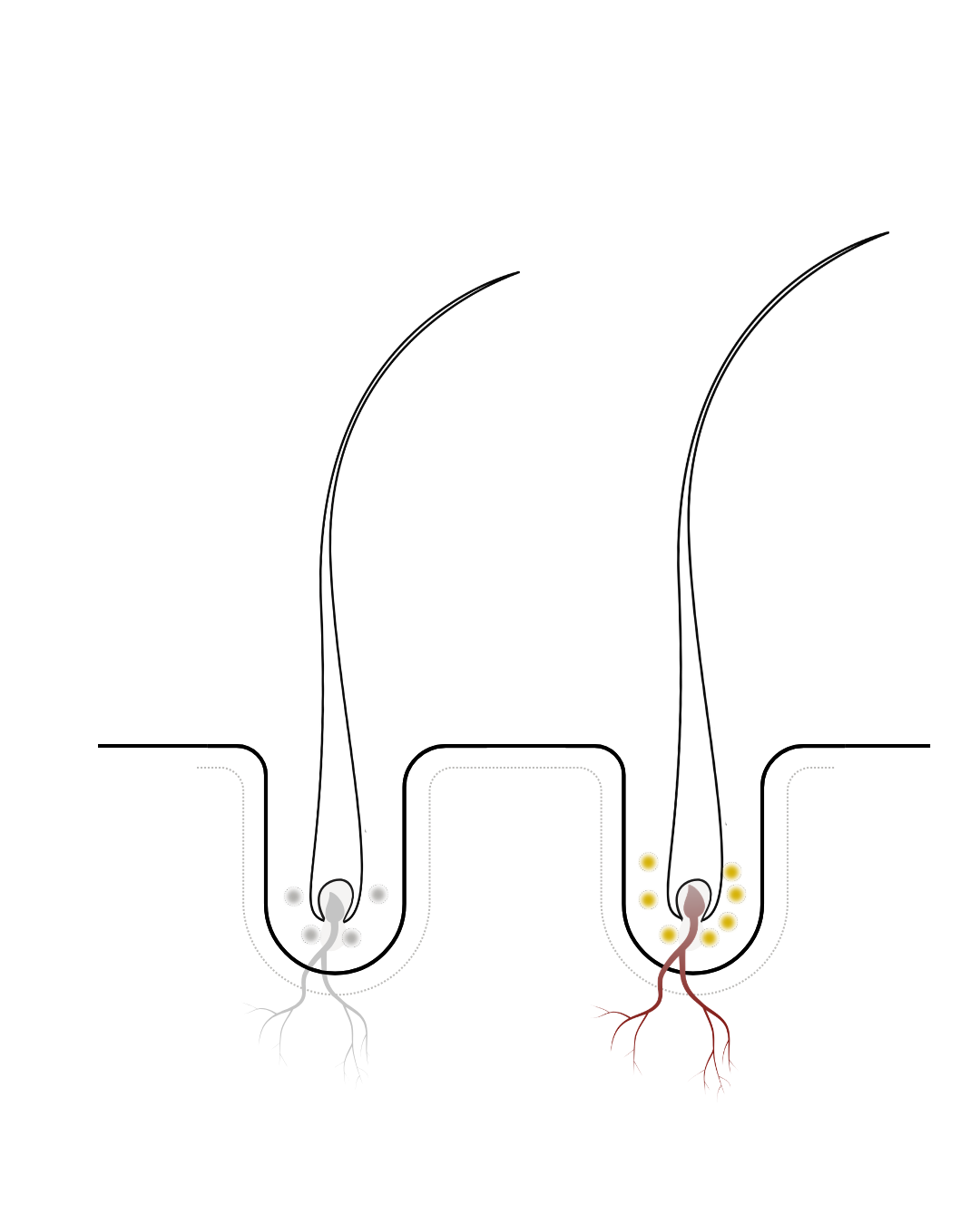
When hair follicles are genetically sensitive to dihydrotestosterone (DHT), hormonal signalling gradually disrupts the normal hair growth cycle.
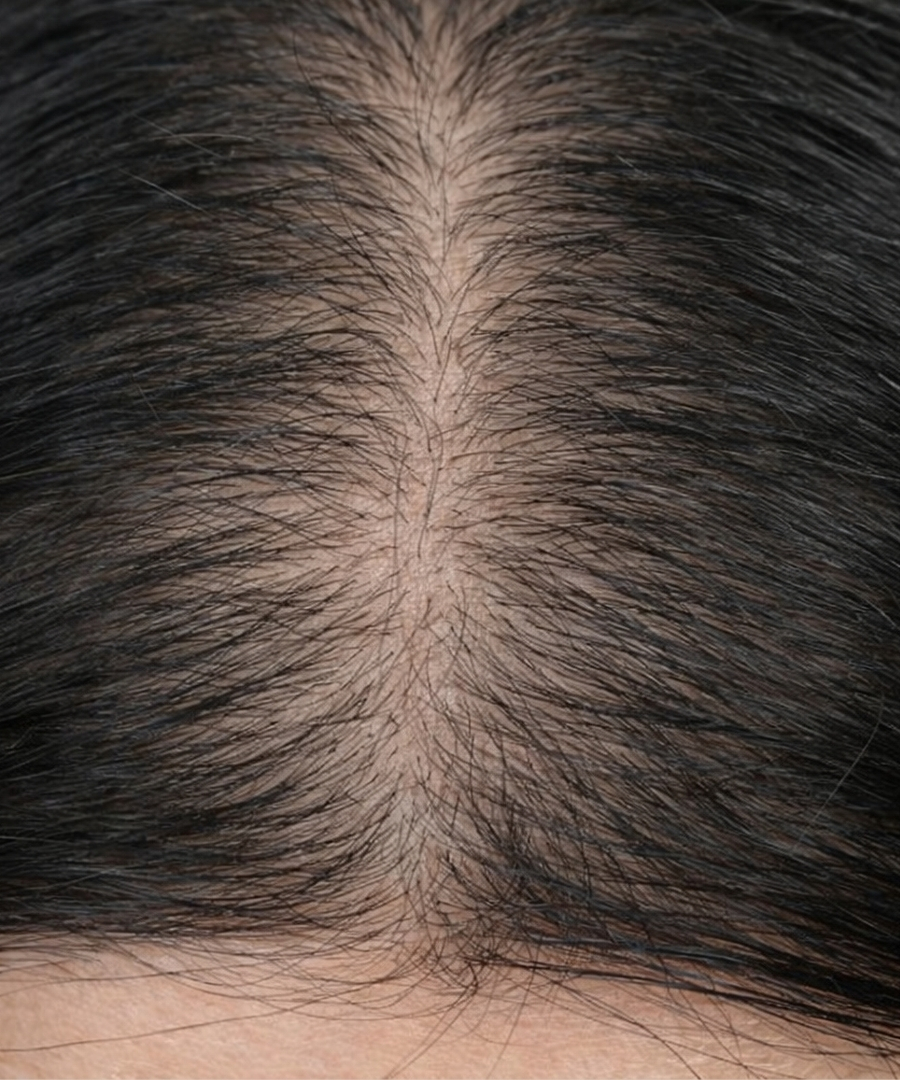
Over time, DHT causes follicles to miniaturise, while reduced perifollicular microcirculation limits the delivery of oxygen and nutrients needed to healthy hair growth. The growth phase shortens, hairs become progressively thinner, and regrowth slows. Both reduced perifollicular microcirculation and ongoing DHT signalling contribute to this progressive decline in follicle function.
This is not sudden hair loss. It is a progressive change in follicle activity driven by androgen sensitivity.
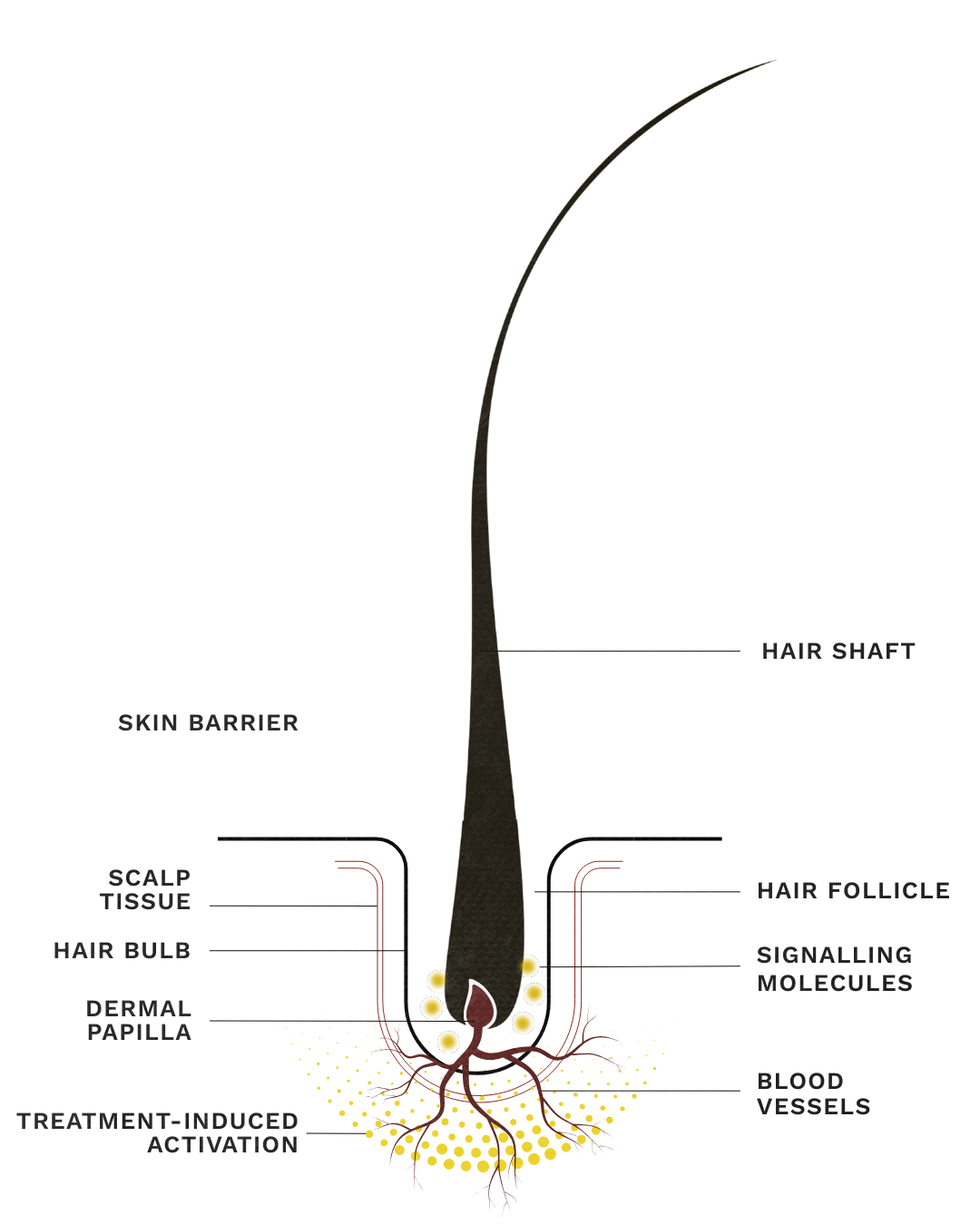
Minoxidil and finasteride act together at the follicle level to address two core mechanisms involved in androgen-related hair loss.
Minoxidil helps increase blood flow around the dermal papilla, improving the delivery of oxygen and nutrients to the hair bulb and supporting cellular activity required for hair production.
At the same time, finasteride reduces the local conversion of testosterone into dihydrotestosterone (DHT), the hormone responsible for progressive follicle miniaturisation in genetically sensitive scalp areas.
By improving follicular circulation while reducing DHT-driven signalling, the combined treatment helps maintain follicles in the active growth phase for longer, supporting stronger, thicker hair regrowth over time.
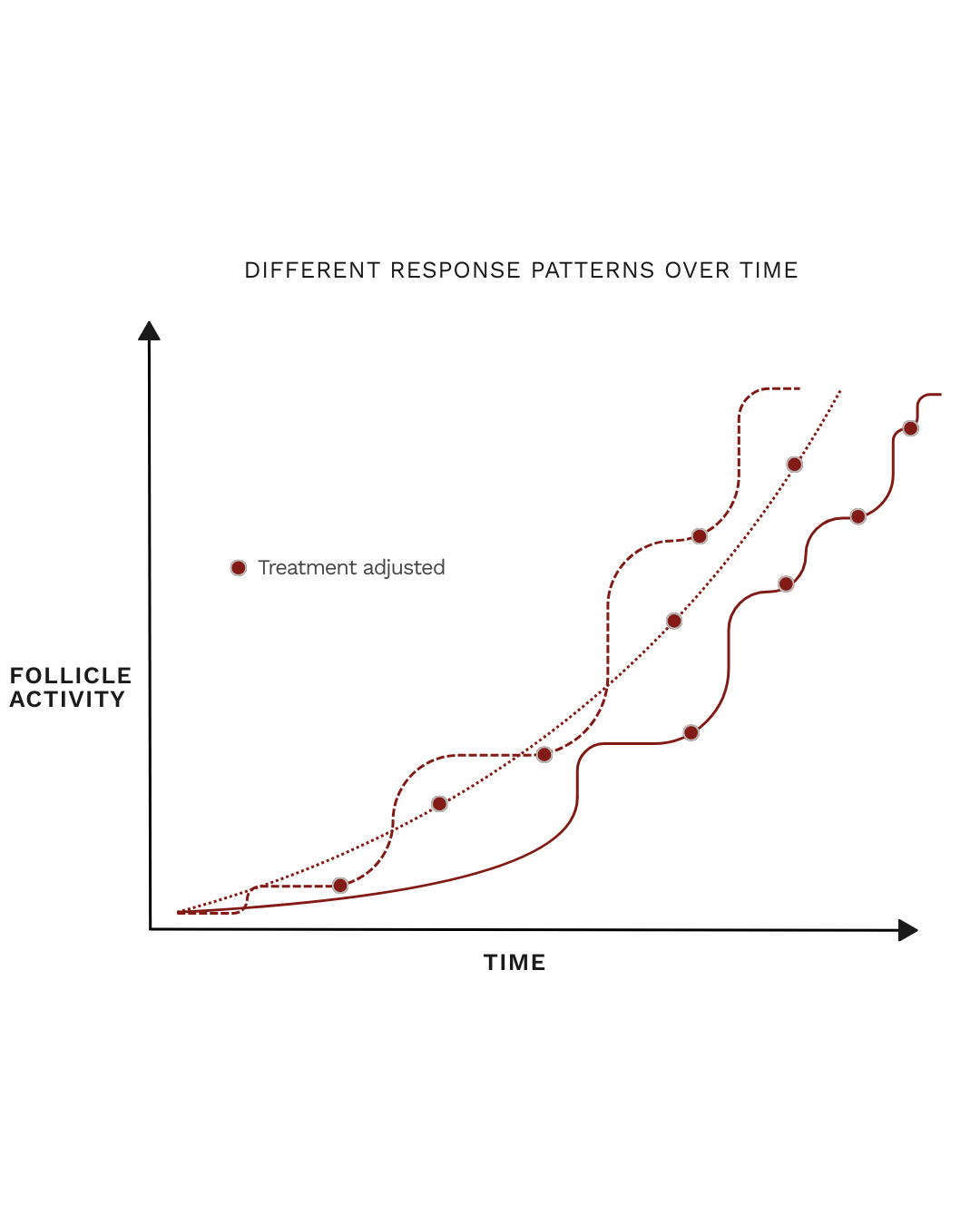
Hair growth is not linear. Follicles respond differently over time.
Some see steady progress, while others experience slower phases or temporary plateaus. These shifts reflect changes in follicle response, not treatment failure.
Ongoing care allows treatment to adjust as the follicle’s response evolves.
Hair growth works best when treatment adapts with you.
YourTreatment Journey
YourTreatment Journey
ASSESSMENT
A confidential online consultation reviewed by our clinicians to understand your hair and scalp needs.
PRESCRIPTION
Clinicians prescribe treatment according to hair loss pattern, with formulations individually compounded in our London clinic and dosages adjusted per patient.
ONGOING CARE
Clinicians continue to monitor progress over time, refining treatment as your hair and scalp respond.

HOLISTIC &
PERSONALISED
Care tailored to the individual, informed by hair and scalp needs.

RESULT LED
CARE
Treatment guided by outcomes and clinical response.

CLINICAL
HERITAGE
Guided by over 40 years of clinical and research experience.

INDIVIDUALLY
COMPOUNDED
Compounded in our London clinic for each patient.

CLINICIAN
GUIDED
Treatment reviewed and refined over time as your needs evolve.
HOLISTIC &
PERSONALISED
Care tailored to the individual, informed by hair and scalp needs.
RESULT LED
CARE
Treatment guided by outcomes and clinical response.
CLINICAL
HERITAGE
Guided by over 40 years of clinical and research experience.
INDIVIDUALLY
COMPOUNDED
Compounded in our London clinic for each patient.
CLINICIAN
GUIDED
Treatment reviewed and refined over time as your needs evolve.
HOLISTIC &
PERSONALISED
Care tailored to the individual, informed by hair and scalp needs.
RESULT LED
CARE
Treatment guided by outcomes and clinical response.
CLINICAL
HERITAGE
Guided by over 40 years of clinical and research experience.
INDIVIDUALLY
COMPOUNDED
Compounded in our London clinic for each patient.
CLINICIAN
GUIDED
Treatment reviewed and refined over time as your needs evolve.
What to expect over time
 DAY 1 – MONTH 2
Disruptive follicular signalling linked to hair loss begins to reduce, helping to stabilise shedding and prepare the follicle for healthier function.
Visible change may be limited at this stage, as treatment is focused on stabilisation rather than regrowth.
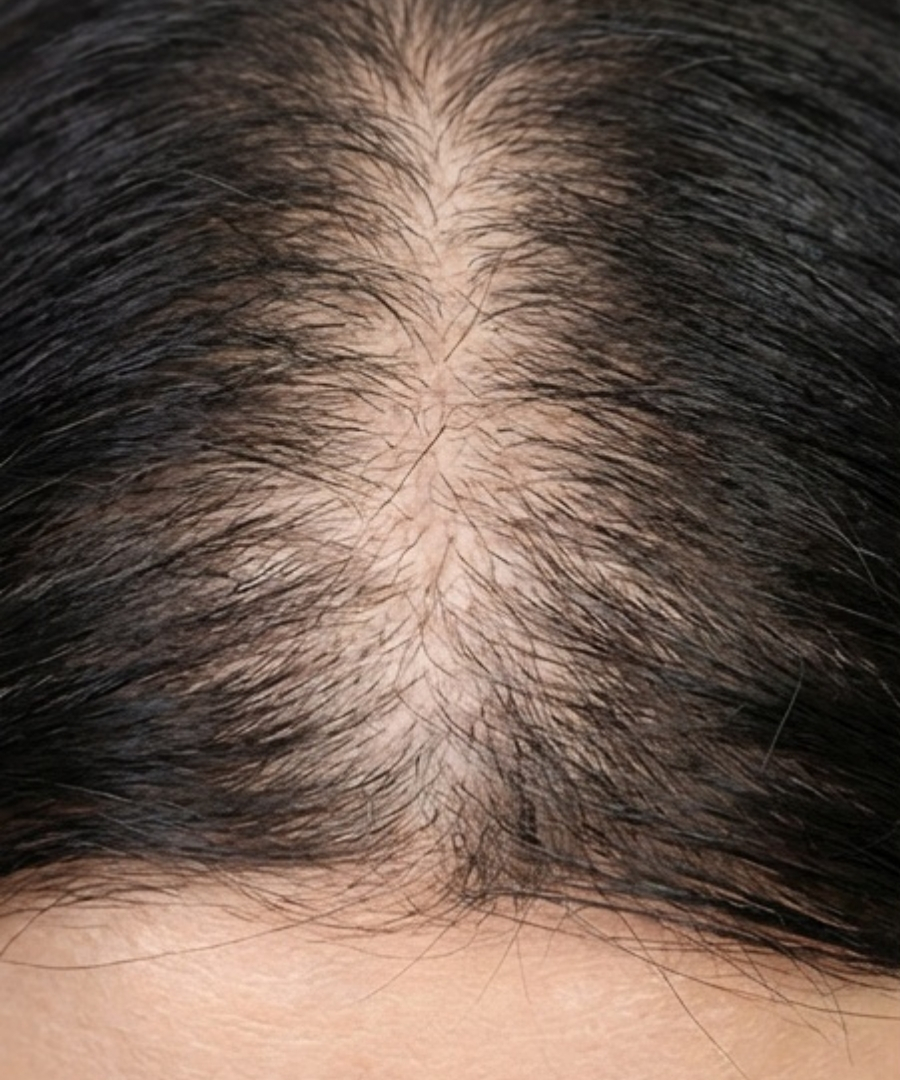 MONTH 2 – MONTH 4
As treatment continues, follicle function improves and hair retention strengthens.
Over this phase, some follicles begin re-entering the growth cycle, supporting early regrowth in responsive areas.
Visible changes may begin to appear during this phase, though progress remains gradual and varies between individuals.
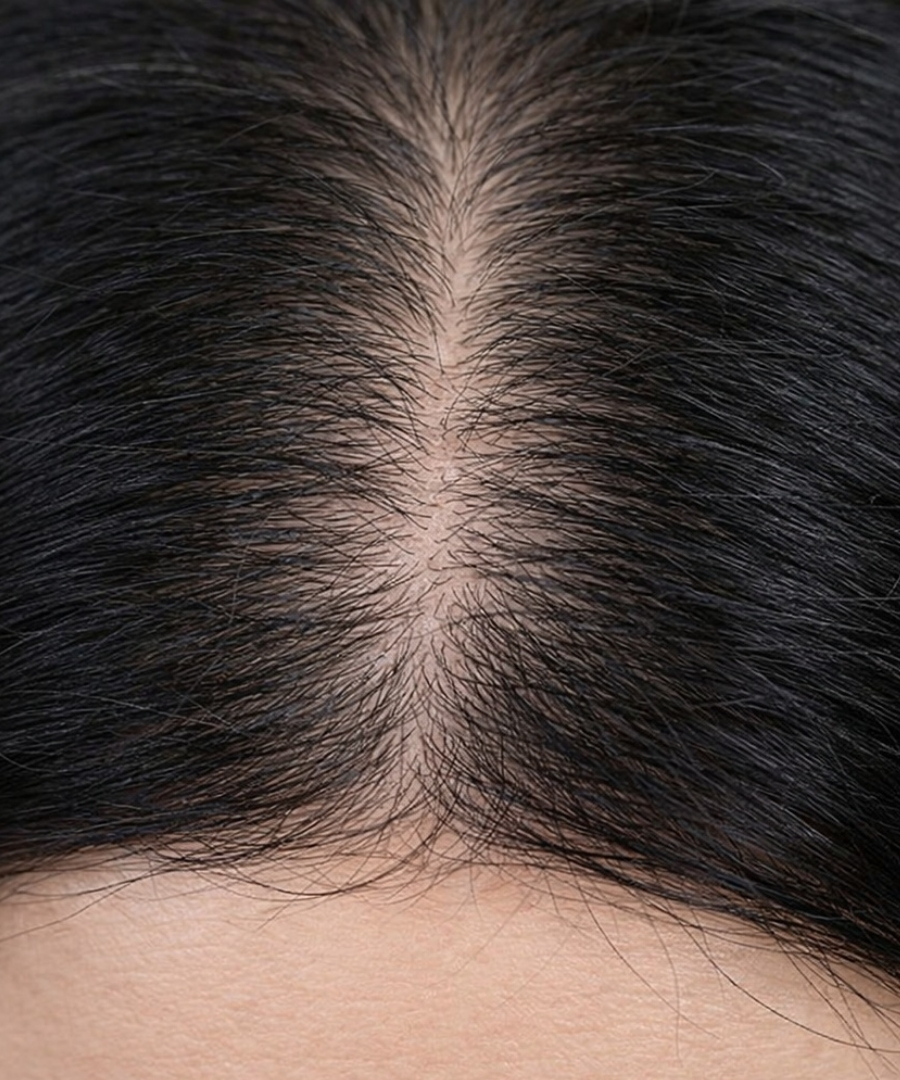
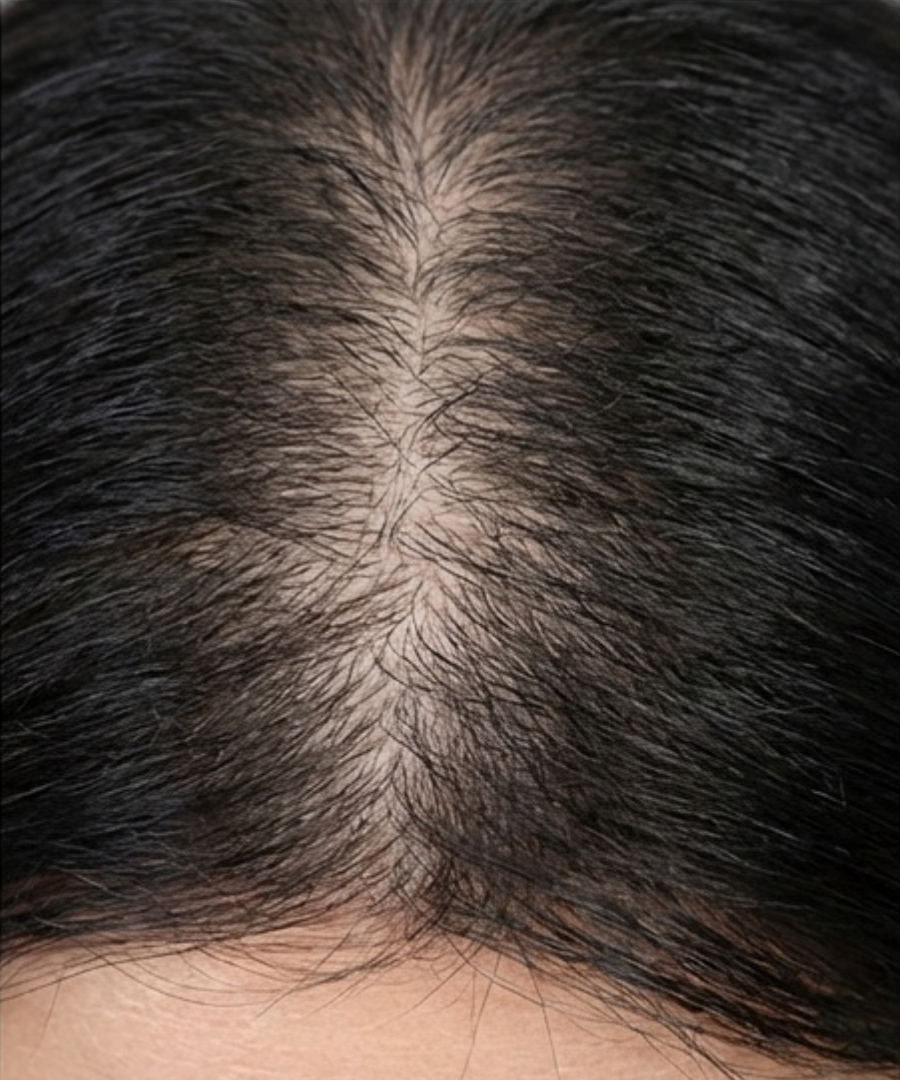 MONTH 4 – MONTH 6
With continued use, hair growth becomes more established and existing hairs strengthen over time.
Improvements in density and coverage may continue gradually, supported by ongoing specialist review.
Visible improvement continues to build gradually, with results varying between individuals.
A Different Standard of Care
| MESHKATI PHARMACY |
Online Prescription Platforms |
Traditional In-Clinic Care |
|
|---|---|---|---|
| Individually Compounded Per Patient |
 |
 |
Sometimes |
| Clinician-Led Prescribing | |
Limited | |
| Ongoing Treatment Adjustment | |
Limited | Limited |
| Clinician-Led Care Without Clinic Visits |
|
|
|
| Specialist Heritage In Hair Care | |
|
Sometimes |
Frequently
Asked
QuestionsFrequently Asked Questions
How does the consultation work
You complete a confidential online consultation, which is reviewed by our clinicians. Your treatment plan is then discussed with a clinician to ensure it aligns with your needs and goals.
Is this an in-person clinic visit
Our care is mainly delivered online, allowing you to complete your assessment and follow-up reviews remotely. If needed, face-to-face consultations are available at our London clinic.
Are treatments personalised
Yes. Treatments are personalised at formulation level. Ingredients and strengths are tailored to each patient based on clinical assessment, rather than using a standardised formulation.
Where are treatments made
All prescription treatments are individually compounded in our Meshkati Pharmacy in London under strict clinical and regulatory standards.
Will my treatment change over time
Possibly. Hair and scalp needs can evolve, and your treatment may be adjusted based on progress, response, and clinician review.
How long does ongoing care last
Care is provided throughout the course of treatment, with clinicians offering guidance as needed. After treatment ends, clinicians remain available to discuss any questions relating to past care.
Does pricing include clinician guidance
Yes. Pricing includes clinician review and ongoing monitoring throughout treatment.
How long does it take to see results
Many patients notice changes within three to six months, with continued improvement over longer periods. Results vary depending on individual response and treatment consistency.
Can I cancel or pause treatment
Yes. Treatment may be paused or discontinued at any time. Patients are advised to discuss any changes with their clinician to ensure safe management.